
INTRODUCTION
The human skeleton is the internal framework of the human body. It gives structure and allowing for movement. The human Skeletal System. Is Composed of bones, Cartilage, and ligaments in the body surrounded by the body muscular system. The human skeleton is about 20 percent body weight. Children have more bones which is about 270 bones and it get fused as they grow up to 206 of adult bones. There are some difference in female and male skeleton. The female skeleton has a broader pelvis compared to that of mans to accommodate for pregnancy and of child birth. On the other hand males skeleton is usually longer and has a high bone mass.

STRUCTURE OF THE BONE UNDER MACRO ANATOMY OT THE BONES
There are two main layers of the human bone these includes:
THE OUTER LAYER, known as cortical bone or compact bone which forms a hard outer shell and it surrounds the inner trabecular bone.
It consist of tightly packed mineralized collagen fibers that is arranged in concentric circle known as lamellae, and organized around the central canals called Haversian canals.
These canals contain blood vessels and nerves that nourishes and supply the bone tissue with oxygen and nutrients needed for the bone.
THE INNER LAYER, which is called cancellous bone or spongy bone, it is honeycomb-like network of interconnected trabeculae and it starts from the underlying cortical bone. This inner structure provides a lattice-work for bone marrow, blood vessels, and nerves. The bone marrow helps in producing new blood cells that help in fighting infections, and for repairing and maintaining the bone tissue.
To add more to these two main layers, bones also contains periosteum – a thin layer of connective tissue that covers the whole surface of the bone except at the ends of the long bone where it is covered in articular cartilage. Periosteum aids in anchoring tendons and ligaments to the bone, protects the bone from damage and for facilitating the growth and repair of the bone. Therefore, macro anatomy of the bone involves the careful arrangement of different tissue layers that forms a highly organized structure that is both strong and flexible also for providing support, movement, and protection to the body, William Morrison 2010.
STRUCTURE OF THE BONE UNDER MICRO ANATOMY
Bones are made of bone matrix, that has both organic and inorganic materials. Bone matrix is laid down by osteoblasts as collagen, called osteoid. Osteoid is hardened with inorganic salts, that includes calcium and phosphate, and also by chemicals released from the osteoblasts through the process known as mineralization.
In the year 2016 Orthop Trauma underlined, the basic unit of microscopic bone is an osteon (or Haversian system). Osteons are more like cylindrical structures that can measure several millimeters long and about 0.2 mm in diameter.
The structure of bones under Micro anatomy consist of many components that includes:
1. Periosteum: A fibrous membrane surrounding the outer surface of the bone that contains blood vessels and nerves.
2. Cortical (compact) bone: A dense and solid external layer of the bone that provide strength.
3. Cancellous (spongy) bone: A honeycombed internal layer that consists of bone marrow and it helps to reduce the weight of the bone.
4. Medullary cavity: A hollow space within the diaphysis that typically contains bone marrow.
5. Epiphysis: This is the distal and proximal ends of the bone, this mainly is covered by articular cartilage.
6. Articular cartilage: Is a smooth and slippery layer surrounding the epiphyses that helps to reduce friction and improve movement at the joint.
7. Osteon: This is the basic structural and functional unit of the bone, consists of concentric rings of hard mineralized tissue called lamellae.
8. Haversian canal: It is a central channel that runs through each osteon which contains blood vessels and nerves.
9. Lacunae: The small spaces between adjacent lamellae and it houses osteocytes.
10. Canaliculi: These are tiny channels that radiate from the lacunae and it allow the movement of nutrients and waste between osteocytes and the blood vessels of the Haversian canal. Thus, the microanatomy of the bone is usually designed to allow for optimal strength, flexibility, and for metabolic function.
CLASSIFICATION OF THE BONES
Bones are classified according to there shape and functions, there are five types of bones this includes:
Long bones: These bones are typically longer than they are, wide and have a shaft and two ends. It include the femur, humerus, and phalanges.
Short bones: These are Short bones and are roughly cube-shaped, they responsible for stability and support. They include the bones in the wrist and ankle.
Flat bones: These bones are usually flattened, thin, and often curved that aids to protect vital organs. These are; skull bones, scapula, and ribs.
Irregular bones: These type of bones have complex shapes and do not fit into any of the other categories. Examples include the vertebrae and facial bones.
Sesamoid bones: Bones that are specialized to develop in tendons where there is friction, tension, or stress. The largest sesamoid bone in the body is the patella.
FUNCTIONS OF THE BONES
The bones that forms the structural framework of the body as skeleton they are very significant to the body, the following are the functions;
a) Support: Bones forms a structural framework that supports the body’s organs and tissues.
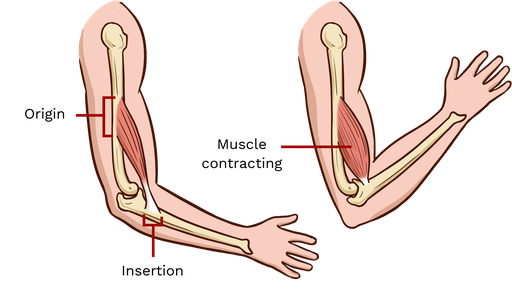
b) Movement: Bones work in conjunction with muscular system that facilitate movement, and for providing anchorage and leverage points for muscle attachment.
c) Protection: Bones protect internal organs such as the brain, heart, and lungs from injury.
d) Blood cell production: Bones are the site of blood cell production, specifically red and white blood cells and platelets, like red bone marrow.
e) Provides mineral storage: Bones act as a storage for minerals like calcium and phosphorus, which are essential for maintaining healthy bones and teeth, and also plays an important role for body’s metabolic processes.
f) Also involve in endocrine function: Bones produces hormones that regulate blood sugar, fat metabolism, and growth of bones.
DIVISION OF THE SKELETON:
According To Staci Bronson in the year 2002 stated, human skeleton consists of 206 bones, these bone can be group in two divisions, the axial and appendicular skeleton.
AXIAL SKELETON;
The axial skeleton is composed of the skull, vertebral column, and thoracic cage known as ribs and sternum.
• The skull is divided into the cranium and the face. The cranium comprises of flattened bones that protect the brain and houses the organs responsible for hearing and equilibrium, while the face protects and supports the entrances to the digestive and respiratory systems and also provides attachment points for muscles which is for facial expression and mastication.
• The vertebral column also divides into five regions: the cervical which is neck, thoracic the chest, lumbar the lower back, sacral the pelvic, and the coccygeal to be tailbone. The vertebral column helps to protects the spinal cord and for supporting the body.
• And the thoracic cage is composed of the sternum which is breastbone, and up to 12 pairs of ribs, and costal cartilages that attaches the ribs to the sternum. The thoracic cage helps to protect the internal organs which are located in the thoracic cavity, that includes the heart, lungs, and major blood vessels.
Therefore, the axial skeleton is responsible for support, protection, and attachment points for muscles and organs throughout the body.
THE APPENDICULAR
Appendicular skeleton is also broken down into two major parts: these includes the limbs and the girdles.
A. THE LIMBS: These are the upper and lower extremities and are connected to the axial skeleton through the pectoral and pelvic girdles. The upper limb consist of the humerus of the arm, radius and ulna of the forearm, carpals known as wrist bones, metacarpals as hand bones and phalanges that are fingers. The lower limb composed of the femur the thigh bone, the tibia and the fibula which is the lower leg bones, tarsals named as ankle bones, metatarsals the foot bones, and phalanges known as toes.
B. THE GIRDLES: girdles forms the bony structures that attaches the limbs to the axial skeleton. The pectoral girdle, called shoulder girdle, composed of the clavicle the collarbone and scapula the shoulder blade and they supports the upper limbs. The pelvic girdle, which is the hip girdle or pelvic bone, that is the ilium, ischium, and pubis bones they support the lower limbs.
To add on, The division of appendicular skeleton helps us to understand the role of bones. The unique compositional structure of each bone in the limbs and girdles ensures for specialized movements in different directions, providing the necessary support for activities like walking, running, jumping, and also grasping objects.
Without the proper structure and functions of these bones and their tissues in the body
movement and support of the body would not be possible.




Leave a Reply